

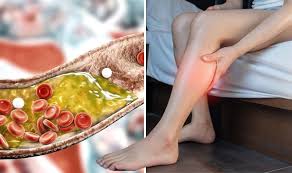
• Unfortunately there are usually no symptoms of high cholesterol – but there are warning signs if levels get dangerously high.
This fatty, wax-like substance is found in the blood, and too much of it can cause serious health problems. Over time, these deposits grow and make it tough for blood to flow through the arteries, with the accumulation sometimes suddenly breaking off and forming a clot, leading to a heart attack or stroke. This build-up can also cause high blood pressure.
High levels of cholesterol can increase your risk of heart disease, and as such pharmacist Abbas Kanani, of Chemist Click Online Pharmacy, is keen to spell out the dangers. He said: “Peripheral artery disease (PAD) can occur when plaque builds up in the walls of the arteries, blocking the blood flow that supplies blood to your legs and feet, as well as your kidneys, arms, and stomach.”
The first sign of this condition, which is caused by too much cholesterol, is a “painful ache in the legs when walking, which usually disappears after a few minutes’ rest”.
This is medically referred to as intermittent claudication, which tends to affect both legs at the same time. However it isn’t unusual to experience the pain more intensely in one leg.
“Pain can vary from mild to severe and tends to stop after a few minutes when you rest your legs,” added Kanani.
Symptoms of PAD can include:
* Fatigue
* Cramping
* Pain in your legs during exercise
* Aches
* Discomfort in your legs and feet
If you experience recurring leg pain while exercising, you should see your GP, advises Kanani, who added: “Many people mistakenly think this is just part of growing older, but there’s no reason why an otherwise healthy person should experience leg pain.”
Eating an unhealthy diet and not exercising enough means you are more than likely to develop high cholesterol, and if you’ve reached the stage where you’re getting the symptoms then you will most likely need prescribed medication such as statins, which helps lower cholesterol.
Top tips to lower your cholesterol
To reduce your cholesterol, the NHS suggests trying to cut down on fatty food, especially the type that contain saturated fat.
Eat more: Oily fish, like mackerel and salmon, brown rice, bread and pasta, nuts and seeds, fruits and vegetables
Eat less : Meat pies, sausages and fatty meat, butter, lard and ghee, cream and hard cheese, like cheddar, cakes and biscuits, food that contains coconut oil or palm oil
Exercise: Aim to do at least 150 minutes (2.5 hours) of exercise a week. When embarking on a new exercise regime it’s important to begin slowly. Some good things to try when starting out include: walking – try to walk fast enough so your heart starts beating faster, swimming and cycling. It’s a good idea to try a few different exercises to find something you like doing.
Stop smoking: Smoking can raise your cholesterol and make you more likely to have serious problems such as heart attacks, strokes and cancer. There is always help available to stop smoking, either from your GP or the NHS Stop Smoking Service – your GP can refer you or you can call the helpline on 0300 1231044 (England only). They can also give you useful tips and advice about ways to stop cravings.
Cut down on alcohol: Avoid drinking more than 14 units of alcohol a week. Have several drink-free days each week and try not to drink lots of alcohol in a short time (binge drinking). Ask your GP for help and advice if you’re struggling to cut down.