

By Timothy Ejoh
At any outdoor gathering, the pattern is familiar. One person leaves without a single bite while others spend the evening swatting and scratching.
It is not chance. Decades of research show mosquitoes do prefer some people over others, and the reasons lie in biology, not luck.
Scientists say attraction comes down to a mix of carbon dioxide, body heat, skin chemistry, genetics and even behavior. Understanding those factors is becoming more important as climate change expands the range of disease-carrying mosquitoes.
Mosquitoes locate hosts by sensing carbon dioxide in human breath from as far as 30 meters away. That is usually the first cue that a meal is nearby. They then use smell, vision and heat to close in.
People with higher metabolic rates exhale more CO2. That is why larger adults and those exercising tend to be bitten more often than children.
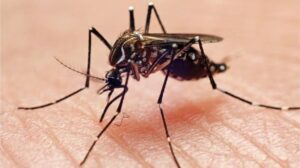
At close range, body temperature and humidity matter. A 2015 study found the Aedes aegypti mosquito, which can transmit dengue, actively seeks out human body temperature.
Sweat also plays a role. Mosquitoes detect chemicals in sweat including lactic acid and ammonia. Not everyone produces the same mix. Some people emit a combination that acts like an “invisible perfume” to mosquitoes.
Exercise increases both heat and lactic acid, making people more noticeable to insects. Washing before going outside can temporarily reduce attractiveness.
The community of microorganisms on skin also influences bites. A 2011 study found that skin with high levels of a few types of bacteria was more attractive to mosquitoes. In contrast, greater diversity of bacteria appeared to make skin less appealing.
Genetics appears to be a major driver. In a Rockefeller University study of 64 volunteers, the most attractive person was 4 times more appealing than the next and 100 times more appealing than the least attractive. Twin studies support the idea that some people are simply born more likely to be bitten.
Research on blood type has produced mixed results. A 2019 study found mosquitoes preferred feeders with Type O blood over other types. A 2004 study found people with Type O were bitten nearly twice as often as those with Type A. Researchers caution blood type is only one factor among many.
Pregnant women may also be at higher risk. Studies show they exhale about 21% more carbon dioxide and are on average 0.7°C warmer around the abdomen. In one study, 70% of bites went to pregnant women versus 52% to non-pregnant women.
Alcohol consumption also appears to increase bites. A 2023 Dutch study of 465 volunteers found those who had drunk beer in the previous 24 hours were 1.35 times more attractive to mosquitoes. The mechanism is not fully understood.
Mosquitoes use visual cues as well. Research indicates colors such as red, orange and black are more attractive than lighter tones. Wearing light, neutral clothing outdoors can modestly reduce bites, though it does not override chemical signals.
Beyond the itch, the research has public health implications. In 2022, there were about 250 million cases of malaria worldwide. Dengue causes an estimated 400 million infections and 22,000 deaths each year, according to the WHO.
As warming temperatures allow mosquitoes to spread into new areas, scientists are looking for new prevention tools. A 2024 study in PNAS Nexus showed two genetically engineered skin bacteria could make a host less attractive to mosquitoes for more than 11 days, longer than the 4 to 8 hours of protection from DEET.
However, there is no single reason some people are “mosquito magnets.” The attraction results from genetics, metabolism, skin microbiome, blood type and behavior, most of which are outside individual control.
Experts say practical steps can still help: wear light-colored clothing, avoid alcohol before outdoor events, apply repellent after exercise, and keep skin cool when possible.
“While mosquitoes genuinely are more attracted to some people than others, we are not all magnets all the time,” researchers note. Understanding why may lead to better ways to prevent mosquito-borne disease.
Very informative