

By Realtime
“Many people have made remarkable comments about Morocco’s economic growth and prosperity; only for us to wake and see tens of thousands of Moroccans desperately crossing into Spain.” Nigerian Senator Shehu Sani’s post on X went viral this week because it named something voters everywhere already suspect: big headlines do not automatically mean better lives.
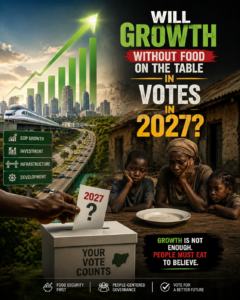
In Nigeria, we are heading into that same conversation, just 18 months ahead of the 2027 general elections. The government will go to the polls asking Nigerians to renew its mandate based on economic reforms started in 2023. The pitch will be simple — we stabilised the economy, rebuilt reserves, attracted investment, and laid the foundation for growth. FirstBank’s Mid-Year Outlook 2026 backs that story with numbers. External reserves are at $51.46 billion as of June 30, 2026. Capital importation rose 83.8% year-on-year to $10.37 billion in Q1. Refined petroleum exports jumped 20.3%, thanks largely to the Dangote Refinery, and the goods account surplus widened to $5.95 billion. The bank itself said the conversation is shifting “from stabilisation to growth and productivity.”
But elections are not won on central bank reports. They are won at bus parks, in classrooms, and at food markets. And that is where the problem sits. Inflation is still high. The naira reforms and subsidy removal that helped stabilise the books also pushed the price of rice, transport and electricity up, and those prices have not come down enough. Financing is still restrictive for the small businesses that employ most Nigerians. And jobs have not kept pace. Youth unemployment remains above 30%. The growth we are seeing is coming from refining, banking, and portfolio flows — sectors that add billions to GDP but do not hire millions.
FirstBank warned about this directly: “the benefits of improved macroeconomic stability have yet to fully filter through to businesses and households.” That sentence will likely define the 2027 campaign. Because for an incumbent government seeking re-election, macroeconomic stability is only half the argument. The other half is: what has it done for you? Can people feed better, earn more, and see a future here?
The Morocco example Senator Sani cited matters because it shows what happens when that question is not answered. Morocco has high-speed trains, world-class ports, and is an auto export leader. Yet young people are still risking their lives to cross into Spain. The prosperity exists, but it is not inclusive, not fast enough, and not felt widely. If voters do not feel growth, they will vote with their feet — or with their ballot.
Between now and 2027, the government’s political future will depend less on new policy announcements and more on conversion. Can the $51 billion in reserves translate to cheaper food? Can the Dangote Refinery and better FX liquidity translate to lower transport costs and more factories hiring? Can investment in Lagos and Abuja spread to Benue, Bayelsa and Bauchi?
Opposition parties already know this. Expect 2027 campaigns to focus less on GDP and more on “kitchen table economics.” The argument will be: you told us to endure for stability, now show us the prosperity. If inflation is still eating wages and jobs are still scarce by early 2027, then all the macro gains risk becoming a campaign liability instead of an asset.
This is the core dilemma of democratic economics. Reforms take time, but elections do not wait. Voters reward what they feel, not what they are told. As FirstBank put it, “Macroeconomic stabilisation is the foundation, but our collective focus must now shift to strengthening productive activity, accelerating private investment and delivering broad-based improvements that create lasting prosperity for Nigerians.”
Whether that happens before 2027 will decide more than economic charts. It will decide who gets a second term. Because in the end, governments are not re-elected for reserves. They are re-elected for results people can see, touch, and live on. And if those results do not arrive, then like the young people in Morocco, Nigerians will also look for another option — at the ballot box.