

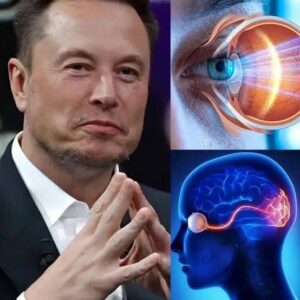
Breakthrough research for the blind is imminent, courtesy of Elon Musk’s Neuralink.
Musk says the company’s next implant won’t fix the eye — it’ll bypass it. The chip would transmit signals directly to the brain’s visual cortex, restoring sight for people even if they’ve never seen before.
“Even if somebody has never had vision, if the visual cortex is intact, we believe we can give them sight,” Musk said. “We’ll start with low-resolution vision, like early video games, then improve from there.”
The long-term goal goes beyond normal vision. Future versions could let people see infrared, ultraviolet, and even radar.
“Long term, we could enable vision beyond the human range. It’s basically superhuman vision. You’d have superpowers,” he added.
Neuralink already has FDA approval to test its motor chip in paralysis patients. The vision implant would be its second major application, launching as regulators and ethicists debate how far brain-computer interfaces (BCIs) should go.
If it works, BCIs will shift from restoring lost function to augmenting human senses. That’s the “superpower” angle Musk is pushing — and the part guaranteed to spark debate.