

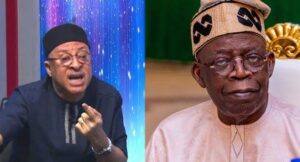
At 26, Professor Pat Utomi was already Special Assistant to President Shehu Shagari on economic matters – a government that oversaw one of Nigeria’s worst economic slumps in history.
Nigeria at the time was transiting from the oil boom era under Generals Yakubu Gowon and Olusegun Obasanjo, an era many historians say wasted Nigeria’s opportunity to develop on what is now called stomach infrastructure.
According to economic records, the Gowon/Obasanjo era invested billions of naira on frivolities – from the Udoji wage bonanza, to the monumental cement importation armada deadlock, to jamborees and the famous FESTAC ’77. Critics say Obasanjo and Gowon, alongside some public servants, ate Nigeria’s future.
Like President Bola Ahmed Tinubu, Shagari inherited a dying economy.
But unlike Tinubu who embarked on bold economic reforms, Shagari continued the business-as-usual route.
At the time, Nigeria was committing billions of dollars to defend the Naira. Shagari, probably listening to advisers including the young Utomi, chose not to float the naira. Numerous subsidies introduced by Gowon were retained.
The result was catastrophic. Borrowing grew by almost 200 percent, as Nigeria’s debt climbed from about N7 billion to over N30 billion. The so-called “good life” led to massive importation while export fell as the artificially strong naira killed local production.
Soon, the $10 billion foreign reserve Shagari met disappeared.
Nigeria had no dollars to import basic commodities. Local industries had no dollars to buy machine parts and raw materials. Shelves became empty. Citizens could no longer find food, drugs and other essentials to buy even when they had money.
Inflation jumped from 10 percent in 1980 to over 35 percent, forcing Shagari to ban importation of some specific goods to conserve dollars.
Analysts note that Nigeria was then just a nation of about 60 million people.
President Tinubu, they argue, is pushing through the same crisis without the disastrous approach of Shagari, but for a population now over four times what Shagari managed.
During the Shagari disaster, the Naira was artificially stronger than the dollar – a pointer, supporters of the current reforms say, that a naira valued below N500 to a dollar does not automatically translate to a comfortable life.
They recall that it was the much-criticized IBB Structural Adjustment Programme (SAP) which devalued the Naira that eventually resurrected Nigeria’s economy from collapse – a government in which Utomi also served.
The internet is currently awash with numerous old videos of Pat Utomi eulogizing Tinubu, fueling speculations that he may have fallen out with Tinubu over attempts to reinvent what critics call the Shagari economic harakiri.
Utomi is now being positioned in some quarters as the potential economic minister in a Peter Obi presidency – a move his critics describe as an attempt to repeat past mistakes.