

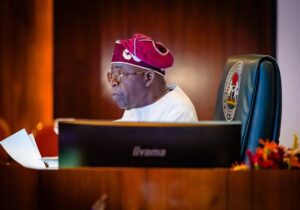
Nigeria’s Presidency on Thursday said an ongoing Freedom of Information Act, FOIA, case in Washington, D.C. involving President Bola Ahmed Tinubu is a civil records-disclosure dispute and “not a criminal case,” urging the media to distinguish court proceedings from “partisan speculation.”
In a statement signed by Special Adviser on Information and Strategy, Bayo Onanuga, the Presidency clarified the case before the United States District Court for the District of Columbia, Civil Action No. 23-1816, comes after U.S. agencies withheld or declined to confirm records sought by plaintiff Aaron Greenspan in 2022.
“The matter is a civil records-disclosure dispute under the United States Freedom of Information Act. It is not a criminal case against President Bola Ahmed Tinubu, nor has the court found him guilty of any criminal wrongdoing,” the statement said.
The Presidency said the dispute stems from 23 years after the American Consulate in Lagos, in a Feb. 4, 2003 letter to then Inspector General of Police Tafa Balogun, stated that an FBI records check found “no criminal arrest records, wants, or warrants” for then Lagos Governor Tinubu.
In 2022, Greenspan, described in the statement as someone who “works with Nigerian opposition figures including David Hundeyin and Atiku Abubakar,” filed FOIA requests to several U.S. agencies. After agencies withheld records or declined to confirm or deny their existence, Greenspan filed suit in 2023. President Tinubu was later permitted to join as an intervenor.
According to the Presidency, the court granted summary judgment in favor of the CIA, EOUSA, Department of State, Department of the Treasury and the IRS after they invoked the “Glomar” defence, under which agencies neither confirm nor deny the existence of records to protect personnel, sources and investigative techniques.
That left claims involving the Federal Bureau of Investigation and the Drug Enforcement Administration. In compliance with court orders, the FBI and DEA produced 399 pages with redactions made under U.S. law, the statement said.
The agencies cited multiple FOIA exemptions, including: Exemption 3 for grand jury proceedings and pen register information; Exemption 5 for attorney work-product and law enforcement documents; and Exemptions 6, 7(C), 7(D) and 7(E) covering personal privacy and protection of confidential sources and investigative techniques.
President Tinubu, on advice of counsel, has also asserted his rights under FOIA Exemption 7(C), the Presidency said.
The statement said the plaintiff has until Sept. 11, 2026 to file opposition, while the FBI, DEA and the intervenor have until Sept. 18, 2026 to respond.
“The release or withholding of records under FOIA does not, by itself, establish criminal liability. The case concerns access to government records and the proper application of statutory exemptions,” it added.
The Presidency also pushed back against commentary by Karl von Batten, saying he and his client “are not a party to the case.” It said the outcome rests with U.S. District Judge Beryl A. Howell “based on the evidence, applicable law, and the parties’ arguments, not the wishful preference of Alhaji Atiku Abubakar or his agent.”
The statement urged Nigerian media and the public to distinguish “verified court proceedings from partisan speculation.”