

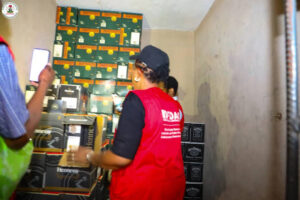
Behind the makeshift parking stores of Zamfara Plaza, inside the sprawling BBA Trade Fair Complex on Badagry Expressway, Ojo, operatives of Nigeria’s drug regulator found what they described as a factory of death.
On Tuesday, the National Agency for Food and Drug Administration and Control (NAFDAC) raided more than 20 illegal stores in a coordinated operation by its Investigation & Enforcement Directorate.
Inside, officers said they met suspects blending ethanol and unsafe chemicals, refilling bottles of popular premium brands, revalidating expired drinks for resale, and stockpiling banned imported products. Two suspects were apprehended. The haul — counterfeit whisky, brandy, vodka and wine — was valued at over N2 billion.
The raid is the latest in a growing crackdown, but experts warn it reveals a much deeper crisis.
Nigeria’s fake alcohol market has exploded in recent years, fuelled by high demand, soaring prices of genuine products, and weak distribution controls.
In December 2023, NAFDAC shut down the Cemetery Market in Aba, Abia State — described as the largest hub for fake drinks and consumables in the southeast — where counterfeiters were producing wines and spirits in filthy, unhygienic conditions using river water, colouring agents and industrial alcohol.
Similar operations have been busted in Lagos, Onitsha, Kano and Abuja. In 2024, the agency destroyed fake products worth over N32 billion in one operation in the southeast, and raided factories in Ogun State producing counterfeit malt drinks and spirits.
Last year in Port Harcourt, three people died after consuming counterfeit gin locally called “ogogoro” adulterated with methanol — a pattern NAFDAC says is becoming common.
Authentic spirits are made from regulated ethanol. Counterfeit operators often use industrial-grade methanol or unrefined ethanol, cheaper synthetic flavours, and artificial colouring.
According to World Health Organization, methanol — even in small amounts — can cause blindness, liver failure, kidney damage and death. It is metabolized in the body to formic acid, which attacks the optic nerve.
“These drinks are not just fake, they are toxic,” a NAFDAC official said during the Trade Fair raid. “They are produced without any quality control, no expiry management, and no regard for human life.”
The revalidation of expired drinks is another risk. Expired beverages can harbour chemical changes and microbial growth that increase toxicity.
Nigeria is already battling a rising burden of non-communicable diseases. Public health doctors say counterfeit alcohol adds to it.
A Lagos-based gastroenterologist, said hospitals are seeing more cases of acute liver injury, kidney dysfunction, severe gastritis and unexplained blindness linked to adulterated alcohol, particularly during festive seasons.
“You take what you think is a known brand, but you are drinking a chemical cocktail. The liver and kidneys bear the brunt. Some patients arrive in acute renal failure,” he said.
The National Centre for Disease Control has also warned that methanol poisoning outbreaks are often misreported as food poisoning, masking the scale of the problem.
Beyond physical harm, the economic impact is huge. Genuine manufacturers lose revenue, government loses excise duty, and consumer confidence collapses.
NAFDAC has urged Nigerians to remain vigilant, buy from reputable outlets, check for NAFDAC registration numbers, examine bottle seals and labels, and report suspicious production or sales.
Reports can be made via its complaints line: 0800-1-NAFDAC (0800-1-623322).
“This is a public health emergency,” the agency said. “No part of the country should be allowed to become a haven for fake and unwholesome products.”
For now, the more than 20 shops at Trade Fair Complex have been sealed. But with similar clusters operating across major markets, regulators admit the fight is far from over.