

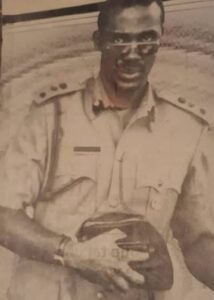
Retired Nigerian Colonel Frank Omenka, former commander of the Directorate of Military Intelligence (DMI) Security Group under late military ruler General Sani Abacha, has broken more than 30 years of silence, denying allegations of torture and insisting a 1995 coup plot was genuine.
Speaking in a virtual forum organised by The Experiential Leadership in Africa (TEL-Africa) in partnership with Premium Times on Thursday, Omenka addressed longstanding accusations linked to his tenure from 1993 to 1998.
Omenka rejected claims that he fled Nigeria after Abacha’s death in June 1998.
“I did not go into exile. I travelled abroad because my children were already outside the country… Everybody knew where I was,” he said.
He said he did not appear before the Human Rights Violations Investigation Commission, known as the Oputa Panel, because he was unaware of its proceedings.
“I switched off completely from Nigeria because what happened to me was painful,” he said.
Omenka was a member of the military tribunal that in July 1995 sentenced _The NEWS_ magazine editor Kunle Ajibade and others to life imprisonment over an alleged coup attempt. Critics at the time described it as a “phantom coup”.
“There was a coup, and there will always remain a coup. I investigated it. I know what I saw,” he said. He named former head of state Olusegun Obasanjo and the late General Shehu Musa Yar’Adua among those linked to the case.
Ajibade, who participated as a moderator, challenged Omenka on the impact of the convictions. Omenka responded: “I live by the truth. That is the only prayer God hears.”
Human rights groups and former detainees have accused DMI operatives under Omenka of arbitrary detention, intimidation and abuse. Specific allegations included threats of sexual violence and the rape and pregnancy of an 18-year-old detainee, Bunmi Samuel, who was reported to have died after release.
Omenka denied all of it.
“There was no physical contact. There was always a table between the person being questioned and us… we never touched anybody,” he said.
On the Samuel case, he said: “I do not know how the Security Group suddenly became a laboratory for making love and a maternity home at the same time,” adding that records involving the British High Commission could be verified.
Omenka said he and one other officer were retired immediately after Abacha’s death and were briefly detained in 1998 over unsubstantiated coup allegations. He said he left office without assets.
“I had no house. I had no money. I had to do odd jobs to survive,” he said.
Asked about remorse, he said: “There is nothing to regret if what people are saying is not true. Professionally, I did my job very, very well.”
TEL-Africa said the session was the first in a series intended to gather accounts from officials of the Abacha era.
Abacha ruled Nigeria from 1993 until his death in 1998. His government was widely criticised for human rights violations. The Oputa Panel, inaugurated in 1999 under civilian rule, documented abuses during military governments but did not prosecute individuals.
No court delivered a definitive judgment on Omenka’s personal responsibility for abuses alleged by former detainees.