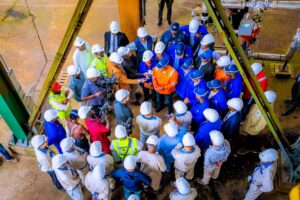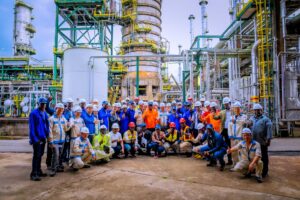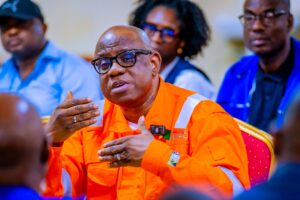
NNPCL has signed a memorandum of understanding to explore the rehabilitation of the Port Harcourt and Warri refineries under a performance-based partnership model, as Abuja seeks to end years of underperformance at its state-owned plants.
Officials said the MoU initiates a rigorous evaluation phase and is not a binding contract. Prospective partners will fund the full due diligence themselves, a step the government said was intended to keep the process data-driven and commercially focused.
Nigeria operates three state-owned refineries: Port Harcourt, with a combined capacity of 210,000 barrels per day; Warri, 125,000 bpd; and Kaduna, 110,000 bpd. The plants have run far below nameplate capacity for more than a decade due to poor maintenance, funding gaps and pipeline vandalism.
The shortfall has left Nigeria, Africa’s largest crude producer reliant on imports for most of its petrol, diesel and aviation fuel, save for the recent inauguration of Dangote Refinery which has drastically reduced imports. The government has repeatedly announced rehabilitation timelines, but none have delivered sustained output.
A $1.5 billion revamp of Port Harcourt, awarded in 2021, has faced delays, while Warri and Kaduna have remained largely shut. The Nigeria National Petroleum Company Ltd (NNPCL) said earlier this year it was reviewing its approach to refinery management.
Under the new model, investors will be evaluated on technical capacity, financing and delivery milestones rather than on upfront state guarantees. The government described it as a move “toward lasting results” and said the objective was “profitable and self-sustaining refineries”.
“Fixing a refinery takes more than pipes and pumps. It takes the right partners,” the statement said. “The MoU is an agreement to explore working together, not a commitment.”
The plan also includes expanding the petrochemicals value chain and investing in gas-based industries. Proposals under review include new methanol plants to be sited alongside the refineries, to leverage Nigeria’s abundant natural gas reserves.
Officials said the broader vision was to build an integrated downstream sector that creates jobs and reduces import dependence.
“Real change isn’t announced once. It’s built through discipline applied consistently, at every stage, until it becomes how things are done,” the statement added.
NNPCL has not named the prospective partners. The evaluation phase is expected to determine technical feasibility, commercial terms and investment structure before any final agreements are signed.