

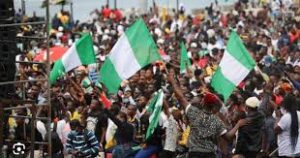
A compilation of prominent Nigerians born, raised or elected outside their states of origin has re-emerged in public debate, with the accompanying question: “Everything was going well; What must have happened to that national unity?”
Per Shehu Sani X handle, the list cites Nigeria’s first President, Nnamdi Azikiwe, and Biafran leader Odumegwu Ojukwu as both born in Zungeru, Niger State.
It also names author Cyprian Ekwensi, born in Minna, Niger State; democracy activist Kudirat Abiola, born in Zaria, Kaduna State; and Major Chukwuma Nzeogwu, a figure of the January 1966 coup, born in Kaduna.
Former Oyo State Governor Bola Ige is listed as having grown up in Kaduna. Nobel laureate Wole Soyinka’s father was a headmaster in Zaria, where Soyinka spent part of his childhood, according to published biographical accounts.
Two political firsts are also referenced: Umaru Altine of Sokoto State, recorded as the first elected Mayor of Enugu, and Ike Madu of Imo State, who served as an elected member of the Kaduna State House of Assembly.
Nigerians say the examples reflect the period from the 1920s to the early 1980s, when migration for civil service, commerce, education and politics was common across Nigeria’s regions.
Zungeru, Minna, Kaduna, Zaria and Enugu served as colonial and early post-independence administrative and railway centres, which facilitated inter-regional movement and settlement.
During that era, political parties and civic life often drew members across regional lines, and cities hosted mixed communities.
Analysts point to several developments frequently cited in academic and public commentary for a shift in inter-regional mobility: the 1967-1970 civil war, successive military governments, the creation of additional states from 1967, and the use of “indigene” status in state and local government appointments under the 1999 Constitution.
The “indigene-settler” distinction has been linked in research to differences in access to certain political and public-sector opportunities at state level.
The Independent National Electoral Commission (INEC) states that eligibility to contest elections is based on citizenship and other constitutional criteria, not place of birth alone. Political party processes and state-level appointments, however, often reference indigeneity.
What’s your response to the renewed discussion on national unity?