

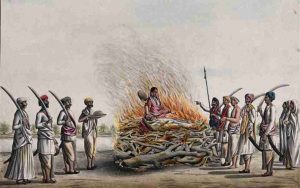
During the British colonial rule of the Indian Subcontinent, the ancient Hindu tradition of Sati – The burning of widows alive, on the funeral pyres of their dead husbands, by force if necessary, was still practiced.
This triggered British condemnation which posed a threat to the Hindu practice.
Depiction of the Sati custom; as the flames consume the woman, she is surrounded by men prepared to force her back into the flames.
The British, horrified by these barbaric practices; passed laws, making Sati and the equally foul tradition of stoning lepers to death, illegal. This enraged Hindu Priests, who gathered a large mob to protest the interference in their religion.
Enter Sir Charles Napier:
“Be it so. This burning of widows is your custom; prepare the funeral pile. But my nation has also a custom. When men burn women alive we hang them, and confiscate all their property. My carpenters shall therefore erect gibbets on which to hang all concerned when the widow is consumed. Let us all act according to national customs.”
Sir Charles J Napier, Commander of British forces in India, 1843–1847.
The mob dispersed, the priests quickly vanished, and the widows were no longer burned alive.