






“It is now clear that those seeking to quit the community do not share that same good faith”‘ – Nigeria
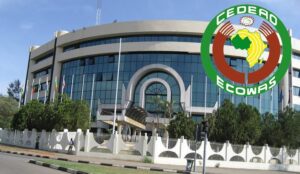
Nigeria has expressed sadness over the decision of Niger, Mali and Burkina Faso to exit the Economic Community of West African States (ECOWAS), the sub regional economic bloc.
The Nigerian government expressed its feeling over the decision of the military juntas reigning in the three Francophone countries to exit the bloc which was created on 28th May, 1975 in Lagos, in a statement signed on Monday by the spokesperson of the Ministry of Foreign Affairs, Fransisca Omayuli.
The statement read: “Nigeria expresses its sadness over the pronouncement by the Military authority in the Republic of Niger indicating that the Republics of Burkina Faso, Mali and Niger have withdrawn membership of their countries from the Economic Community of West African States (ECOWAS).
“For half a century, ECOWAS has worked to promote peace, prosperity and democracy in the region.
“Nigeria stands with ECOWAS to emphasise due process and shared commitment to protect and strengthen the rights and welfare of all citizens of Member States.
“Nigeria has worked sincerely and in good faith to reach out to all members of the ECOWAS family to resolve the difficulties being faced. It is now clear that those seeking to quit the Community do not share that same good faith.
“Instead, unelected leaders engage in a public posturing to deny their people the sovereign right to make fundamental choices over their freedom of movement, freedom to trade and freedom to choose their own leaders.
“Nigeria remains open for engagement with Burkina Faso, Mali and Niger so that all the people of the region can continue to enjoy the economic benefits and democratic values that ECOWAS embraces. Nigeria further appeals to the International Community to continue to extend its support for ECOWAS and the vision of closer partnership, co-operation and integration.”
While Nigeriens celebrate exit from ECOWAS, the problems from this rather unholy exit may be hydra-headed.
Analysts see the three countries’ decision as an unwise one.
Recall that the regional bloc had imposed sanctions on the three countries but more recently in Niger, where soldiers toppled President Mohamed Bazoum, considered to be a strong pillar in the fight against terrorism in the Sahel. The sanctions have crippled Niger’s economy and affected basic services like electricity, a lot of which was procured from Nigeria.
The three countries being led by military juntas were founding members of the regional bloc in 1975 but have now exited, saying ECOWAS has “moved away from the ideals of its founding fathers and pan-Africanism”.
ECOWAS has responded that it was yet to be officially notified of the three countries’ exit, but it was a decision long coming with their formation of the Alliance of Sahel States in September last year.
“This alliance will be a combination of military and economic efforts between the three countries… Our priority is the fight against terrorism in the three countries”, Mali’s defence minister Abdoulaye Diop said at the press conference.
• Trouble in disguise
On the surface, the decision may be seen as the right one by many citizens of the countries, especially with the way ECOWAS handled the coup situation in Niger. However, several analysts see the decision as an unwise one that will haunt the three countries and their neighbours economically, socially, politically and security-wise.
“Niger, Mali, and Burkina Faso withdrawing from ECOWAS amounts to a colossal act of economic self-sabotage. Isolating yourself from your closest neighbours amid an epic economic crisis is profoundly unwise, and unfortunately, ordinary citizens who are led to believe this action serves their interests, will be the primary victims,” said Bulama Bukarti, senior analyst at the Extremism Policy Unit at the Tony Blair Institute for Global Change.
Mr Bukarti, who shared his thoughts on X, said Niger, Mali and Burkina Faso do not have an alternative to the regional bloc ”…This imprudent decision was driven solely by the narrow, narcissistic ego of the military juntas holding these nations hostage.”
The three countries are among the sixteen landlocked states in Africa. Landlocked countries don’t have direct access to the ocean or sea.
For decades, Niger, Mali and Burkina Faso depended on Nigeria and Benin, especially, for their maritime economy and other important sea resources.
Cutting off countries that surround them in a period of economic instability will worsen the economic situation of the three countries especially since none of them has a vibrant economy.
”The three countries should not be arrogant. They should also try to allow diplomacy to prevail because no country is self-sufficient and that is the grund norm of diplomacy itself. International relations are founded on the basis that no country is self-sufficient and that we are relying on one another,” Sulaiman Uba-Gaya, a journalist and public affairs analyst, said in an interview with Trust TV on Monday.
”Nigeria in reality has been the one picking most of the bills of ECOWAS. Most of the other members if you look at their GDPs are not even up to half of Lagos State. Niger’s GDP is merely 14.7 billion dollars, Mali’s is 19.7, likewise, Burkina Faso’s is 19.8. They should also look at the larger picture because their citizens are going to suffer more. There are more Nigeriens coming into Nigeria than Nigerians go into Niger Republic, they stand to get more from us with due respect to them.”
Security situation
In terms of security, the fortune of Niger, Mali and Burkina Faso has not improved since the soldiers took over.
The three countries, like the others around, have been facing terrorism. The porous borders in these countries help marauding terrorists to move around the Sahel, unleashing mayhem. In all the coups, the soldiers vowed to tackle insecurity but the security situation in the three countries has been deteriorating with no end in sight.
In Niger Republic, for instance, the absence of multinational counter-insurgency has made its borders vulnerable, especially around Zinder and Diffa regions bordering Yobe and Borno states in Nigeria.
Northern Nigeria has also not been spared.
Even Niger’s border with Mali was not spared as 17 soldiers were killed while 20 got wounded during a terror attack on Nigerien soldiers. In four months, a media report revealed that Niger suffered an unprecedented 443 military casualties from terror attacks.
In its analysis of the coup and security situation, the Armed Conflict Location & Event Data (ACLED) said Niger has seen a rise in insecurity following the military coup.
“ACLED data show that incidents of violence targeting civilians perpetrated by IS Sahel quadrupled in August relative to July…….since then, the military government in Niger has failed to deliver on its promise to improve stability and security in the country,” ACLED said.
Last year, Mali cancelled its Independence Day celebration following an upsurge in attacks in the northern part of the country.
The country has been at the mercy of violent armed groups since 2012 and when the military took over in 2021, they accused politicians of not doing enough to tackle the situation. But things have not gotten better.
Citizens will suffer
If the situation deteriorates, residents of border communities in the affected countries will bear the brunt. States in extreme northern Nigeria will also not be spared.
Kebbi, Sokoto, Zamfara, Katsina, Jigawa, Yobe and Borno states share a 1,608 kilometres border with the Dosso, Tahou, Maradi, Zinder and Diffa regions of Niger.
In all of these states and regions, there have been intermarriage, business relationships and economic dealings that have existed for decades.
Several analysts believe the latest development is detrimental to business, politics and other engagements between citizens of the countries.
“For us in the northern part of the country (Nigeria), you’ll see that residents of these communities (border) are always engaged in businesses with these people who will be cut off from both activities. The two countries from this side rely heavily on each other for the supply of goods and services required,” Bashir Achida, an economist and senior lecturer at the Usmanu Danfodiyo University Sokoto said.
“This is the major route (Illela – Konni border) for states like Sokoto, Kebbi and even Zamfara to convey goods like onions, garlic and other goods to Ghana, Burkina Faso, Mali and Cote d’Ivoire. They also bring back other commodities. So, this will lead to a loss of millions of Naira. This is a setback to our relationship and economic activities in the two countries,” he added.
(The Guardian & Premium Times)